Reclaiming our streets: why Glasgow needs a new approach to public advertising
The “strategies and approaches used by the private sector to promote products and choices that are detrimental to health” (known as the commercial determinants of health)(1) are increasingly debated in public health circles as important, yet complex, influences on population health. The effects of multinational businesses and their corporate activities on the social environment in which people live and work through, for example marketing, can affect social norms and the cultural desirability of products or brands in often inconspicuous ways. While recent debates on the impact of television advertising of unhealthy food to children has had some media coverage, the increasing commercialisation of public spaces for corporate gain has gone relatively unnoticed.
This blog, written by Étienne Tenn Salle, reflects his recent research on the issue of public advertising and its influence on health and social justice. GCPH invited this blog to highlight and stimulate debate about the creeping and unavoidable corporate activity in public spaces.
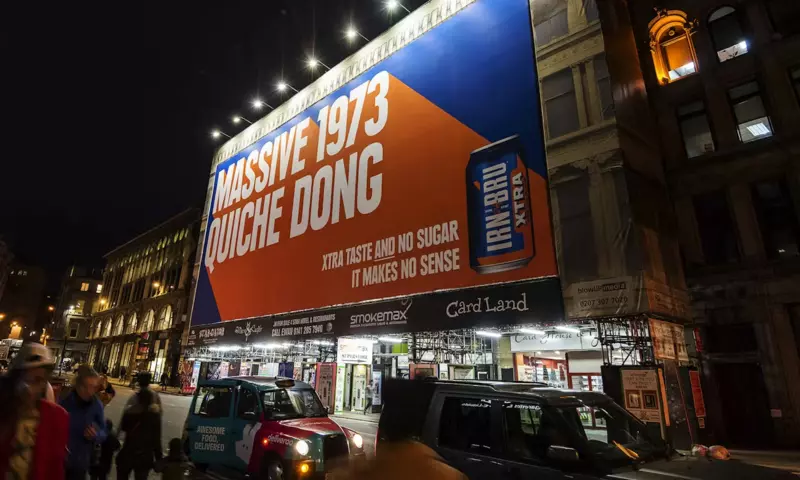
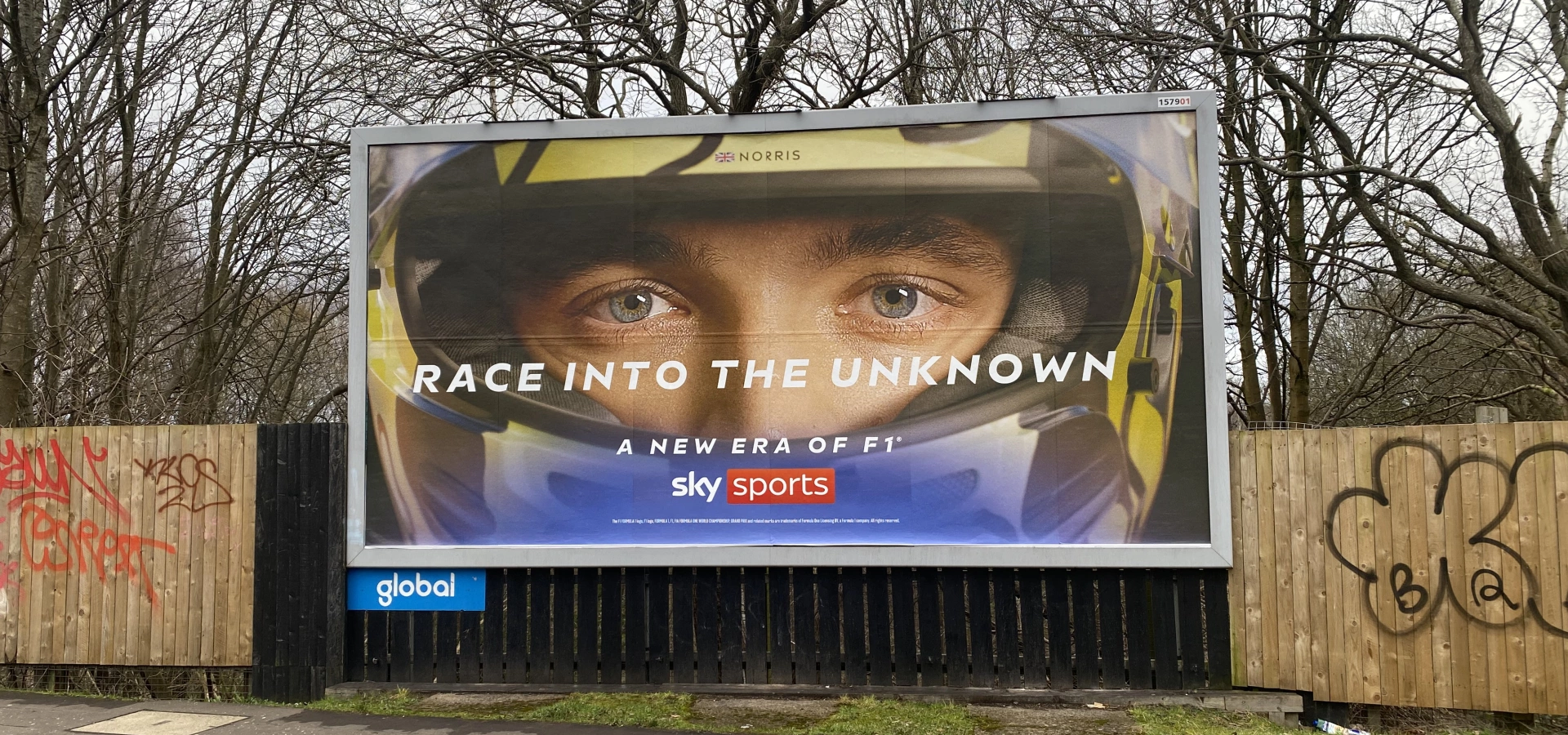
Public advertising is often treated as a neutral part of urban life: something we simply learn to look past as we move through the city. Yet advertising is not passive. It actively shapes what we see, what we value, and what feels normal in our shared spaces.
"Out of Home advertising reaches 98% of the UK population every week."(2)
In a city like Glasgow, where health inequalities remain stark, commitments to social justice are explicit, and climate goals are ambitious, the content and governance of advertising in public spaces deserves much closer scrutiny.
Over the summer of 2025, I collaborated with Glasgow City Councillor for Govan, Dan Hutchison, and several other councillors to explore the evidence supporting increased regulation of outdoor advertising across the city.
Advertising as a population health issue
Public advertising operates at the level of environments rather than individual choice. Unlike online content, it cannot easily be avoided. Billboards, bus shelters, lamppost banners and, often large, digital screens occupy streets, transport routes, and neighbourhood centres, shaping daily exposure, particularly for those who rely most on public infrastructure.
Research consistently shows that exposure to such advertising is not evenly distributed. Areas with higher public transport use, often more deprived communities, tend to host a greater density of advertising sites. This means that children and young people in these areas are disproportionately exposed to commercial messaging, particularly for unhealthy commodities(3). From a population health perspective, this matters because advertising strongly influences social norms and behaviours. Nowhere is this clearer than in the marketing of foods high in fat, salt, and sugar (HFSS).
The hidden cost of HFSS marketing
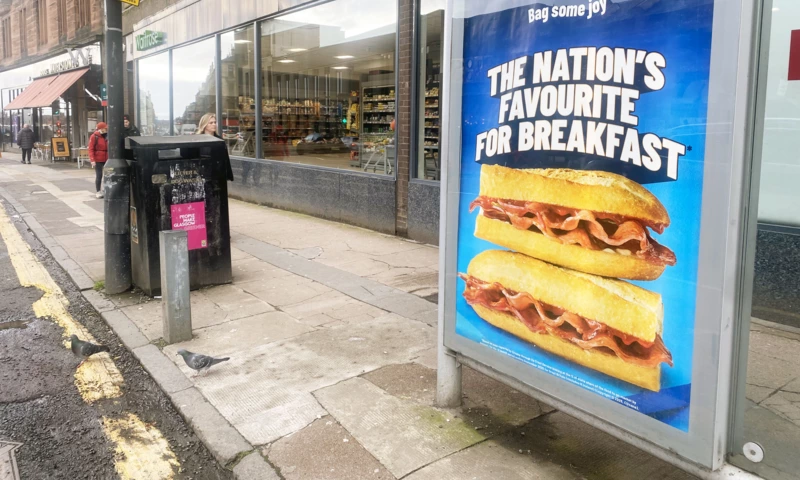
HFSS advertising is pervasive across outdoor spaces and public transport networks. Studies in Scottish cities have found that the majority of food and drink adverts at bus stops promote fast food or sugary drinks, with far fewer promoting healthier options(4). Children are especially susceptible: exposure to HFSS marketing shapes food preferences, increases immediate consumption, and contributes to excess calorie intake(5,6,7). The consequences are well documented; higher exposure to HFSS advertising is associated with increased risks of obesity and associated risks of type 2 diabetes, cardiovascular disease, and some cancers(8). These harms are socially patterned, with children and adults in more deprived areas experiencing higher rates of diet-related ill health, reinforcing existing inequalities(9).
Modelling from London’s healthier food advertising policy suggests that restricting HFSS advertising can prevent tens of thousands of cases of obesity and deliver the greatest benefits to lower-income households(10). This aligns closely with Glasgow’s own Health Improvement Strategic Direction, which emphasises prevention, early intervention, and reducing inequalities as central goals(11).
A climate and ethical misalignment
The influence of public advertising extends beyond diet and consumption to the normalisation of carbon-intensive lifestyles. A prominent example is the marketing of large SUVs. Advertising consistently associates these vehicles with safety, freedom, and adventure, despite their higher emissions, greater risk to pedestrians, and significant contribution to urban air pollution.
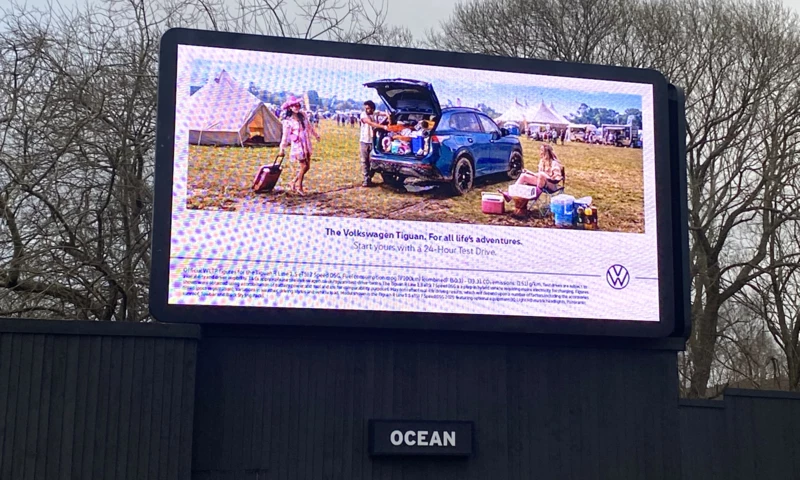
Transport remains one of the largest sources of greenhouse gas emissions in the UK, and SUVs are among the fastest-growing contributors within that sector. Evidence shows that these vehicles are larger, heavier, and have more limited visibility than standard cars, posing a greater danger to pedestrians and consuming more urban street space(12). They are also a source of urban air pollution; for instance, vehicle emissions in the Six Cities Region of Australia are linked to $3 billion in annual health costs and over 1,700 deaths per year(13). Advertising for such vehicles normalizes and glamorizes unsustainable, high-carbon lifestyles that contradict urgent climate action needs. In this way, SUV advertising actively reinforces behaviours that run counter to emissions-reduction goals. For a city that has positioned itself as a climate leader, permitting advertising that promotes high-carbon consumption creates a clear policy contradiction. These messages are often concentrated along major transport corridors and in lower-income areas, meaning the communities already experiencing the greatest burden of pollution-related ill health are also most exposed to advertising that sustains it.
The physical impact on our environment
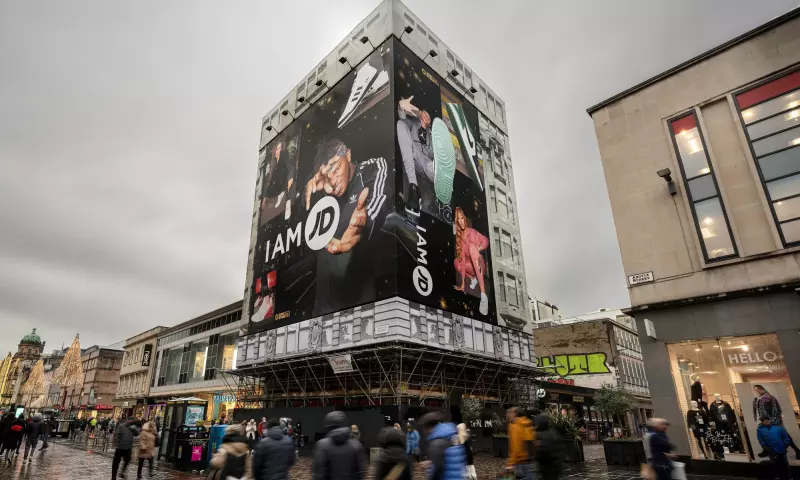
The impact of advertising exists not only in the message, but in the medium it is presented. Advertising structures like A-boards and freestanding digital billboards physically dominate our pavements, impeding pedestrian movement. Increasingly, large roadside digital billboards illuminate residential homes without consent. This "commodification of communal environments" transforms public space into a marketplace, often at the expense of accessibility for those citizens using or living in these streets.
Ethical questions: who gets a voice in public space?
Beyond health and climate impacts, public advertising raises ethical questions about whose messages are legitimised in shared civic spaces. Glasgow currently lacks a proactive framework for assessing the ethical implications of corporate advertising and the extent to which these conflict with government goals. This allows multinational corporations, including those linked to harmful products, environmental destruction, human rights violations, or war profiteering, to occupy public attention through council-regulated infrastructure.
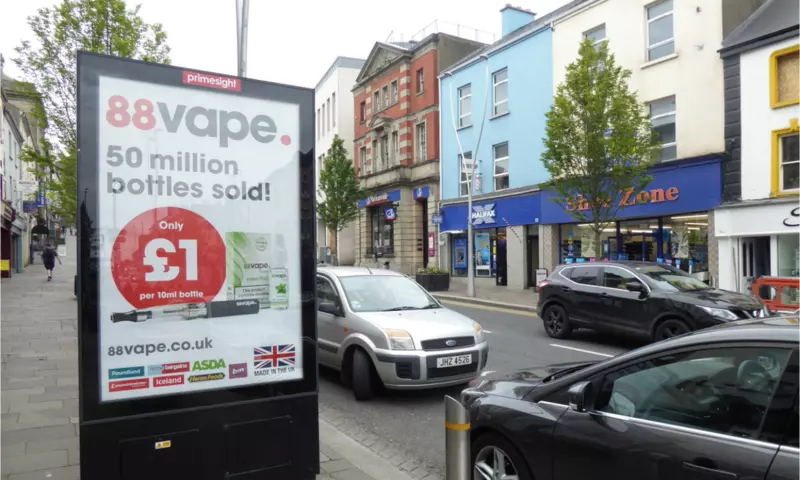
While advertising companies often have internal guidelines, these are typically narrow and commercially driven. They do not adequately address broader ethical concerns such as complicity in exploitation or the promotion of industries fundamentally misaligned with public wellbeing. The absence of clear government standards creates a disconnect between the city’s stated commitments to sustainability fairness and global responsibility and the commercial messages it legitimises in its public spaces.
What can councils do?
Contrary to common assumptions, local authorities are not powerless in this area. Scottish councils have wide legal competence to regulate advertising on land they own or control, to set conditions through contracts, and to introduce policies grounded in public health, safety and amenity(14).
Across the UK, councils have already used these powers to introduce content-based advertising restrictions:
- Transport for London’s HFSS advertising policy has reduced household calorie purchases while increasing advertising revenue(15).
- Several London boroughs and cities such as Bristol have adopted similar healthier advertising frameworks(16).
- Other councils, including Edinburgh, have restricted advertising linked to fossil fuels or high-carbon industries to align with climate strategies(17).
Legal analysis suggests that such policies are lawful, proportionate, and unlikely to be successfully challenged when they are evidence-based and clearly linked to legitimate aims such as protecting health or meeting climate obligations(18,19).
Why this matters now
Glasgow continues to experience some of the poorest health outcomes in Western Europe(20), alongside widening inequalities(21) and escalating climate risks(22). Addressing these challenges requires more than individual behaviour change; it requires reshaping the environments that influence everyday decisions(23).
Public advertising is one such environment. Understanding it as a population health issue, rather than a neutral source of revenue, opens up new possibilities for prevention, fairness, and civic integrity.
Reforming advertising policy would not, on its own, solve Glasgow’s health challenges. But it represents a tangible, evidence-based step toward aligning public space with public good, and ensuring that the messages saturating daily life support, rather than undermine, the city’s health, equity and climate ambitions.
Hailing from Hawai’i, Étienne started at the University of Glasgow in 2022, studying Social & Public Policy. Through his academic journey, he found a specific interest in housing and how its form fundamentally shapes the way we live, work, and commute, and engage with our communities. Étienne will be continuing his education at the LSE in Regional and Urban Planning in the autumn.

 Previous