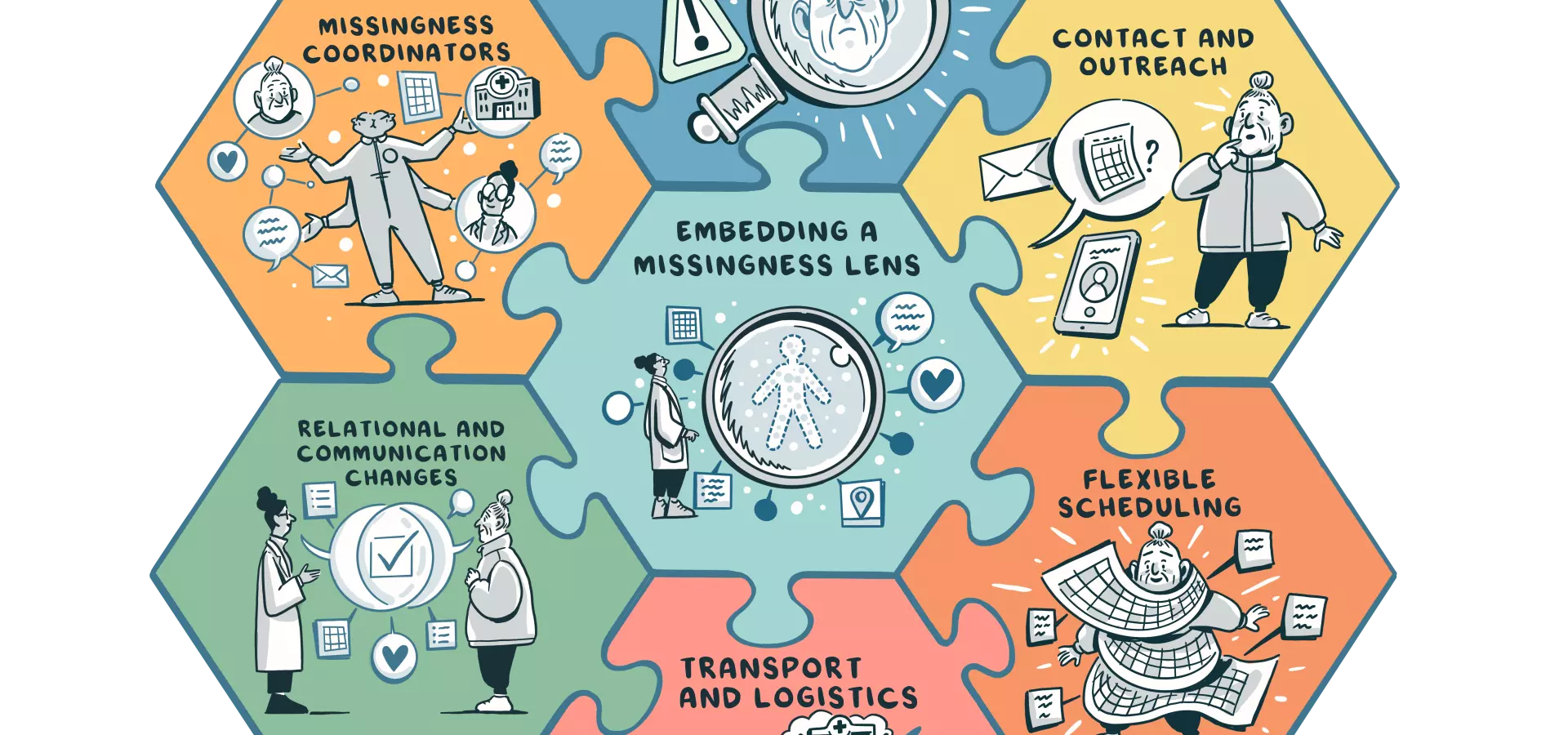
Tackling Missingness in Health and Social Care
 Health and Care, Inequalities, Poverty
 Mar 2024 - Ongoing
Glasgow and Scotland continue to see entrenched and unfair links between social factors (including poverty) and poorer health and wellbeing outcomes amongst the population. Not only do such factors often increase the need for health and care services, but they can also compound poor health by creating complex and enduring barriers to accessing care and initiating or sustaining treatment.
Despite being first described over 50 years ago, the ‘Inverse Care Law’ (Hart, 1971) which states that those who have the greatest health needs are least likely to receive sufficient healthcare resources, is still a persistent issue in today’s Scotland. It is not just the distribution or availability of resources such as GP surgeries, community care or hospitals which can make it difficult for those in most need to receive care. Issues relating to access in its broadest sense (for example travel, costs, stigma, or a lack of culturally-appropriate or trauma-informed services) pose barriers to attending services. Healthcare systems risk widening health inequalities if there are barriers to access or uptake which differentially impact on groups of people (for example, those living in poverty or those whose first language is not English).
“Missingness” is a term recently used in health and social care, which describes the recurring pattern of not taking up offers of care or support, often across different services, which over time can have a negative impact on individuals and their health and wellbeing.
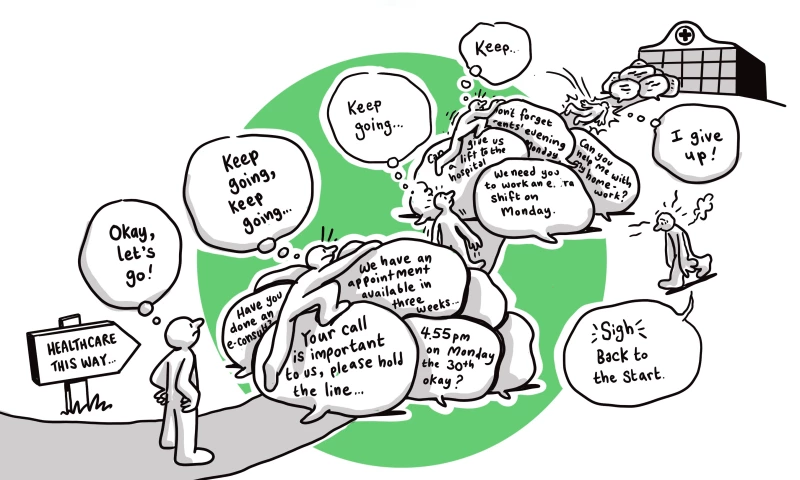
To understand the drivers of missingness and consider pragmatic opportunities for change, GCPH is working with the University of Glasgow to translate research evidence on missingness into meaningful resources to help healthcare professionals and leaders apply a ‘missingness lens’ to their services. These resources are currently being implemented across NHS Greater Glasgow and Clyde (NHS GG&C) to support the co-production of action plans and drive culture and system change. It is hoped this approach can support improved access and the mitigation of healthcare-generated inequalities.
 Overview of page
 Project objectives
The overall purpose of this project is to facilitate change to break the trend in worsening health outcomes by tackling the poverty-related, health service causes of missingness in healthcare across NHS GG&C.
In 2025, GCPH commissioned the University of Glasgow to support implementation of evidence-based practice across NHS GG&C to apply a ‘missingness lens’ to service delivery. This commissioned work included the following aims:
- Conduct a rapid review of the evidence (including grey literature) on poverty as a driver of reduced access to healthcare and its resultant impact.
- Showcase best practice examples of ways to address this within a range of contexts.
- Collate the evidence and actions into an accessible format to enable change in policy and practice.
- Sense-check the evidence and suggested actions with two organisations who are experts in poverty reduction policy and people with lived experience of poverty.
- Identify and present to key decision makers in NHS GG&C with a goal to drive cultural and service change.
- Produce materials that can be utilised to adopt a missingness lens on an ongoing basis by NHS GG&C and other key stakeholders across the NHS.
 What is involved
This work focusses on the translation of learning from research evidence and promising ‘good practice’ from elsewhere into actionable recommendations for services at NHS GG&C to mitigate the barriers to access and uptake of services.
A vital component of this work is to create resources that can support conversations about missingness with decision makers to begin to facilitate wider culture change to embed a ‘missingness’ lens within policy and practice.


 Further resources & reading
- Work from University of Glasgow on Missingness – University of Glasgow - Schools - School of Health & Wellbeing - Research - General Practice and Primary Care - Research - Developing interventions to reduce "missingness" in healthcare
- Research Papers
- Understanding the causes of missingness in primary care: a realist review | BMC Medicine | Full Text
- Demographic and practice factors predicting repeated non-attendance in primary care: a national retrospective cohort analysis - ScienceDirect
- Inclusion health and missingness in health care: dig where you stand | British Journal of General Practice - Report: Missingness in Primary Care - Inclusion health action in general practice: early evaluation report - Executive Summary - Inclusion health action in general practice: early evaluation report - gov.scot
- E-learning module for health and social care practitioners, including videos Introduction to missingness, Causes of missingness, and Interventions and making change happen.
- Presentations - https://youtu.be/MpEjS5iAcUM

 Previous