The forgotten intersection: LGBT+ racially-minoritised communities
In response to the recently published LGBT+ Census report, GCPH has invited LGBT+ community experts to share their reflections and insights on the findings relevant to their work.
For our first guest blog, we invite AJ Allard-Dunbar from Exhale.Group CIC, to share their reflections on the report’s findings which demonstrate that people from racially-minoritised groups were more likely to identify as LGBT+ than white groups in the Census.
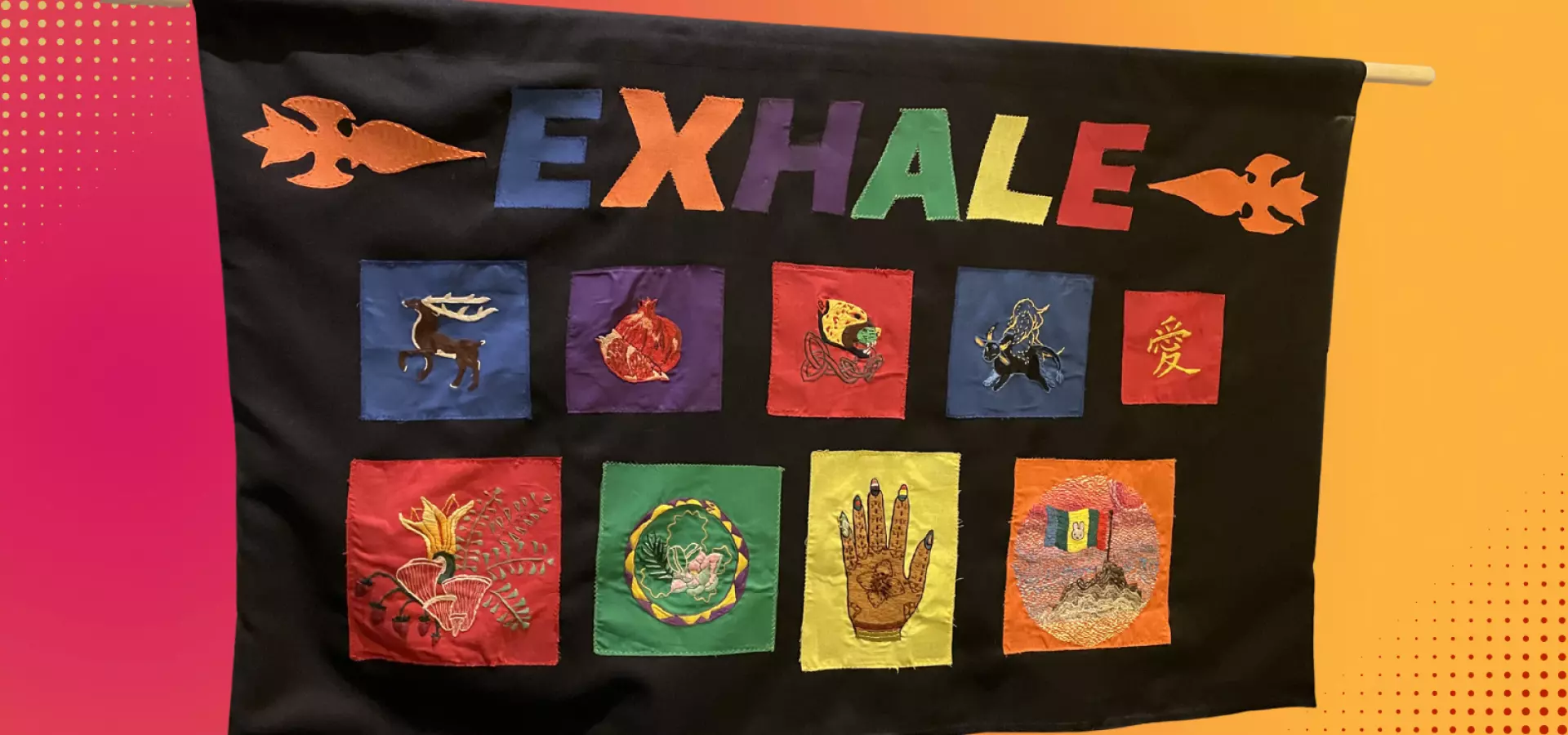
AJ Allard-Dunbar is a researcher specialising in anti-racism, health equity, queer studies and community engagement, and Director at Exhale.Group CIC. Exhale is a Glasgow-based organisation supporting Queer, Trans and Intersex Black People and People of Colour (QTIBPoC) in Scotland to thrive through providing free activities, support and spaces for connection in addition to campaigning for intersectional inclusion.
Exhale.Group CIC was created in response to the lack of spaces and support for QTIBPoC in Scotland. Before its inception, the only spaces that existed for this community in Scotland where specifically targeted towards LGBT+ refugees and asylum seekers, which not all QTIBPoC will identify with. Other QTIBPoC spaces are rooted in nightlife, maintaining the historic role of these spaces for connection and expression for LGBT+ communities whilst recognising the discrimination faced by BPoC and lack of inclusion that can be faced in mainstream/general LGBT+ clubs. However, these spaces are not accessible to everyone and can perpetuate the alcohol and drug harms more prevalent in the LGBT+ community. As a team, we felt this gap ourselves and repeatedly heard from others in our community who were searching for a space they could truly call their own.
The lack of spaces and consideration of our community by public services and LGBT+/BPoC organisations point to how we are ‘forgotten’ in equalities discourse, often seen as a small or insignificant population. There is a general lack of research on the experiences and needs of QTIBPoC in Scotland, with the only research project focusing on this community being undertaken by the Equality Network and BEMIS back in 2009. Due to the lack of organisations specifically working with QTIBPoC, participants were selected from organisations based in England – further demonstrating our lack of visibility in Scotland. Often, practitioners lack experience and thus confidence working within this intersection, and approaches to research can be tokenistic and inauthentic, which further excludes the community from valuable, meaningful and much-needed conversations.
The landmark inclusion of LGBT+ status in the recent Scottish Census is a welcome addition as it has allowed us to quantify our community in public data for the first time. The higher levels of LGBT+ identification among racially-minoritised populations compared to the white population, provide evidence of our existence and a strong argument for the importance of our inclusion, rather than relying on siloed spaces that fail to reflect and support our intersecting identities.
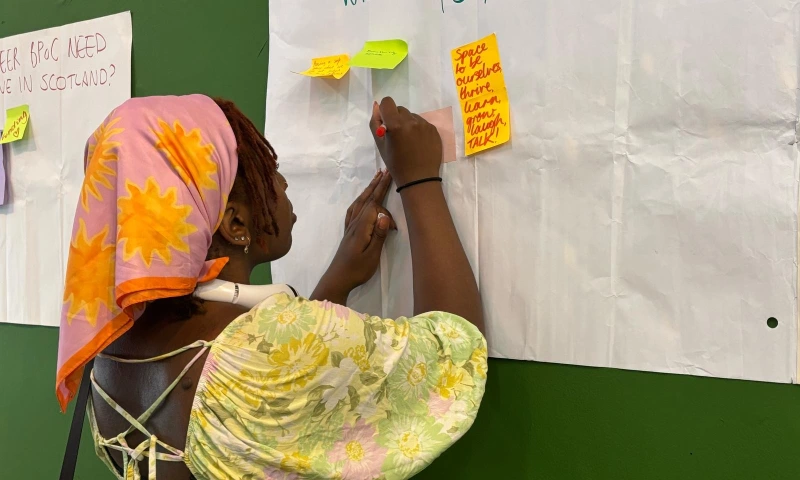
This inclusion is important as the experiences of people within our community are often different to those of white LGBT+ people due to issues relating to intersectional discrimination. Intersectional discrimination is a form of discrimination which occurs when multiple personal characteristics overlap and interact, creating unique, compounded forms of disadvantage. For example, evidence shows that both LGBT+ groups and BPoC groups face higher rates of social isolation and poorer belonging, however, for QTIBPoC this is enhanced due to barriers we can experience attending LGBT+ spaces due to experiences of racism and lack of cultural relevance within these spaces, and barriers to attending spaces designed for BPoC due to fears or experiences of homophobia and/or transphobia.
As social connectedness has major impacts on wellbeing at different levels, the inter-community discrimination and isolation faced by QTIBPoC groups contribute to the increased experience of poorer health and socioeconomic outcomes for this community. A Scottish LGBT+ Health Needs Assessment, identified that for LGBT+ groups, feeling a part of the LGBT+ community greatly impacted wellbeing as this provided individuals with support, validation and a sense of belonging. However, this was not always possible due to the discrimination faced within the community. Stonewall reported that QTIBPoC people are almost twice as likely to attend LGBT-specific venues or events as white LGBT+ people, demonstrating that spaces are used by this community, and so there is the need to ensure they feel safe and are inclusive.
To be truly inclusive, service providers and public health professionals need to look beyond the broader categories of community and dive deeper into the intersectional nuances of the people on the margins of identity groups, to ensure that the most vulnerable populations can access the care and support that they need. Resource must be given to grassroots groups with the expertise on the communities that they serve to enable individuals to flourish.
As Scotland’s only QTIBPoC-led organisation, we welcome the visibility of our community provided by the Census, however this must translate into visibility within service design, research and inclusion initiatives.

 Previous