
Understanding Glasgow's communities: New profiles from the 2022 Census
Following the publication of Glasgow’s neighbourhood profiles in early May, we were delighted to announce last week the launch of a new set of profiles focused specifically on the city’s children and young people.
Using data from Scotland’s 2022 Census, the new sets of profiles provides a fresh snapshot and an up-to-date picture of life across Glasgow’s communities, offering valuable insights into population characteristics, health and wellbeing, and living circumstances across the city.
The profiles are the result of a year-long collaboration with the Data Consultancy team at Public Health Scotland. Covering both adults and children and young people aged 0–24 years, they provide updated statistics for Glasgow’s 56 neighbourhoods, the city’s three sectors (North East, North West and South), and Glasgow as a whole.
Across a wide range of themes - including population demographics, household composition, health, disability, employment, education and poverty - the profiles offer comparable local data to help users better understand their communities and how they compare with the Glasgow average. The children and young people’s profiles, in particular, provide a detailed picture of how young people are growing up and living in different parts of the city.
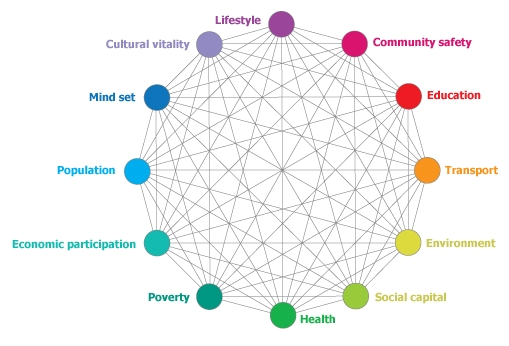
Alongside enabling comparison to the Glasgow average at the neighbourhood level, the new high level Glasgow city profile also provides a benchmark against Scotland as a whole. The profile shows, that since 2011, Glasgow’s population has increased by 9.3%, from 595,080 to 650,300, compared with a 2.7% increase across Scotland. Over the same period, the proportion of people from minority ethnic backgrounds in Glasgow rose from 11.6% to 19.3%, compared with an increase from 8.2% to 12.9% across Scotland. Life expectancy in Glasgow has shown limited improvement over the last decade. There has also been a slight decline in the proportion of people reporting their health as ‘good’, from 77.5% to 76.0%, compared to 79% across Scotland as a whole, with more than a quarter of Glasgow residents (26%) reporting being limited ‘a lot’ or ‘a little’ by disability, compared with the Scottish average of 24%.
Since 2001, Glasgow’s population of children and young people has grown by 3% to 190,090 – due in part to Glasgow having a higher than average proportion of 18–24-year-olds, 43% higher than the Scottish average. Children and young people from minority ethnic backgrounds now make up 29% of Glasgow’s 0–24 years population, compared with 13% across Scotland. In 2022, life expectancy for both male and female children and young people in Glasgow was lower for than the Scottish averages. More than one in four children in Glasgow (26.8%) live in relative poverty, compared with around one in six children across Scotland (16.3%).

Designed to support practitioners, professionals, community organisations, researchers and students, the profiles provide a practical and accessible resource for anyone interested in understanding the factors that shape health and wellbeing across Glasgow’s communities. By bringing together a rich range of local information and by making local information easier to access and understand, we hope they will support better conversations, more informed decision-making, and a deeper understanding of the factors that influence health, wellbeing and inequality both across Glasgow and within individual neighbourhoods.
Alongside the new Glasgow City Profile, we have also produced an evidence briefing examining population and health trends in Glasgow over the past decade. Further evidence briefings are planned, so watch this space.
The previous set of Glasgow city profiles, published in 2014 and based on data from the 2011 Census, have also been made available on the Understanding Glasgow website. It is important to note that several indicators are not directly comparable with those in the newly published profiles because of changes in measures, definitions and data availability. As a result, caution should be exercised when interpreting trends over time.
Together, these profiles provide an important resource for understanding how Glasgow is changing and how experiences, opportunities and outcomes vary across the city and its neighbourhoods. They highlight both the strengths of Glasgow’s communities and the challenges that continue to shape people’s lives. By making high-quality local data more accessible, they offer valuable evidence to support planning, policy, research and community action. We hope they will inform collective efforts to improve health and reduce inequalities across Glasgow.

 Previous
June e-update
Back to